Lore codex
The world of Season 3. Read it before you write a backstory: staff check every application against it.
Wildfire virus
The Wildfire virus is a viral disease that resurrects its host after death into a disease vector, also known as a zombie, and causes it to attack any living organism in order to spread the secondary infection.
The virus initially transmits through airborne particles and causes the host to become an asymptomatic carrier. Following death, Wildfire reactivates the hindbrain and resurrects the deceased host into a zombie, an aggressive vector for the virus. Zombies will attempt to devour any living beings, spreading an active agent of the virus through bites. The active agent causes a secondary infection called necrosepsis that results in a cytokine storm, organ failure and death.
Necrosepsis
Initial symptoms of necrosepsis are often nonspecific, such as a fever and headache. The fever increases and can be upwards of 106.0 °F, causing body chills and sweating. The person later experiences dizziness, weakness, fatigue, and possibly fainting. They may appear pale, with dilated pupils. Soreness eventually overcomes the person and moving may become difficult. The infection site will have fluid discharge, and the skin around the site will be red, inflamed, and hot.
As necrosepsis progresses and causes inflammation of the brain and meninges, symptoms can include anxiety, insomnia, confusion, agitation, abnormal behavior, paranoia, terror, delirium, and hallucinations.
The infection ultimately results in hypercytokinemia (cytokine storm), a pathological reaction in which the innate immune system causes an uncontrolled and excessive release of pro-inflammatory signaling molecules called cytokines. Cytokines are a normal part of the body’s immune response to infection, but their sudden release in large quantities may cause multisystem organ failure and death.
As the major organs begin to fail, the person may be nauseous and experience vomiting and dehydration. They will have difficulty swallowing and breathing as they experience internal hemorrhaging and hemoptysis (coughing up blood). The adrenal glands hemorrhage, the brain shuts down, then the major organs.
Survival is almost impossible once symptoms have presented, even with intensive care.
Signs of reanimation
Typical signs of a zombie after someone has died and reanimated include shambling, a lack of normal human behavior, moaning or growling, paleness, wounds and decomposition, hair loss, and discoloration of the eyes: red sclera with an amber or cloudy pale blue iris.
Treatment
There is no known cure for Wildfire in its initial state that causes resurrection. The only way to completely prevent resurrection is to destroy the brain after death.
The CDC
The Centers for Disease Control and Prevention (CDC) is the federal health agency of the United States, headquartered in Atlanta, Georgia. Its purpose is to study and contain diseases within the United States and, when necessary, to help control outbreaks. Wildfire would become the most significant disease the agency ever encountered.
The CDC discovered the first cases of Wildfire in the United States around April 2010, approximately 131 days before “the Trials,” the event that marked the beginning of the widespread outbreak. Those cases were quarantined and isolated for study, and kept hidden from the public to prevent panic. Wildfire remained completely unknown to the public until August, when the CDC and the World Health Organization declared it a global pandemic.
The fall
Monument Day
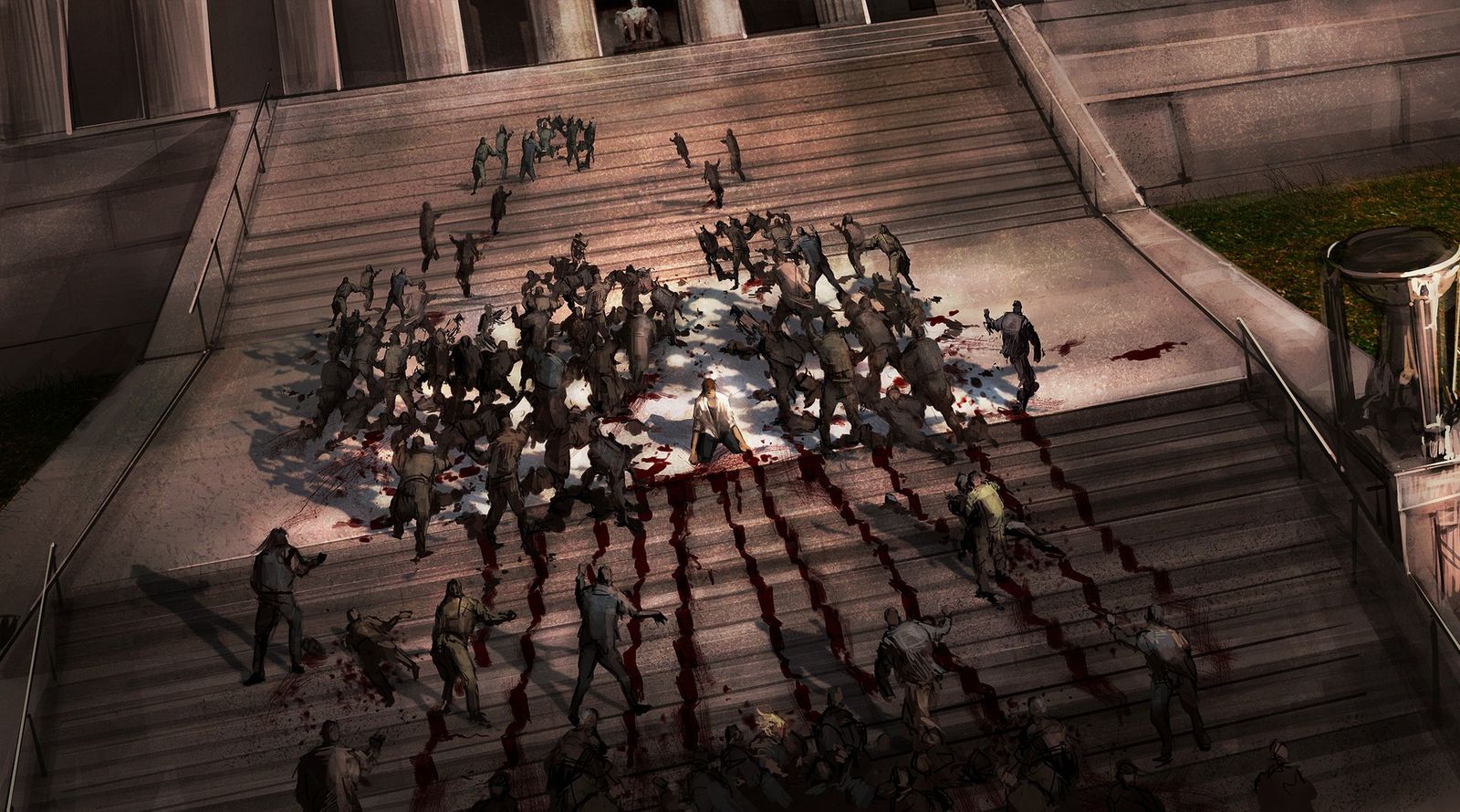
August 27, 2010 · the initial outbreak
By August 25th, the Wildfire virus was known to the general public. Cases rose so quickly that civilian industry collapsed, as every non-essential role was shut down for quarantine countermeasures. News coverage of the virus brought an unprecedented wave of violence, shootings, riots and looting as people prepared for the crisis.
Looting and panic buying emptied the stores, and a national gas shortage followed. People desperate to flee the pandemic jammed the streets, freeways and highways.
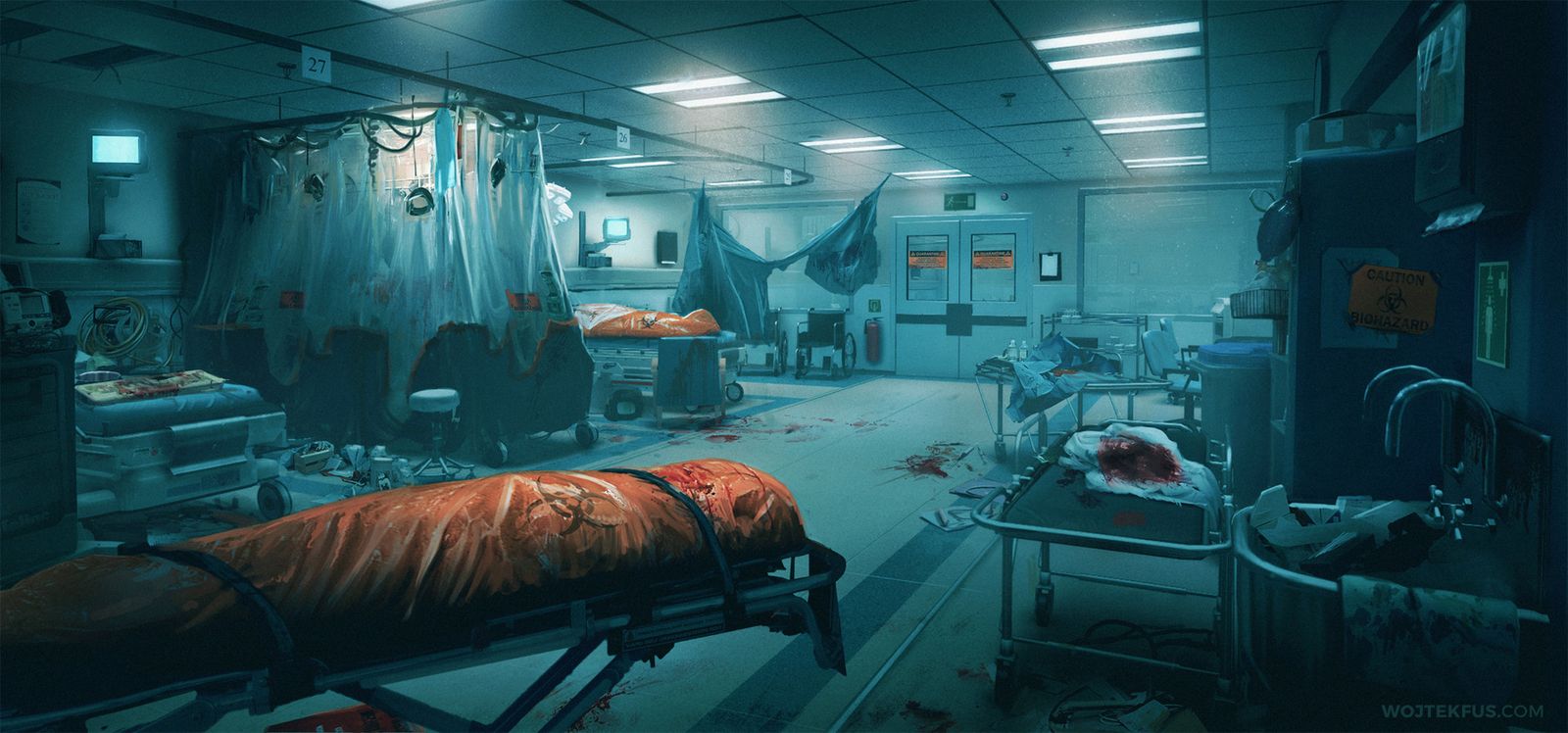
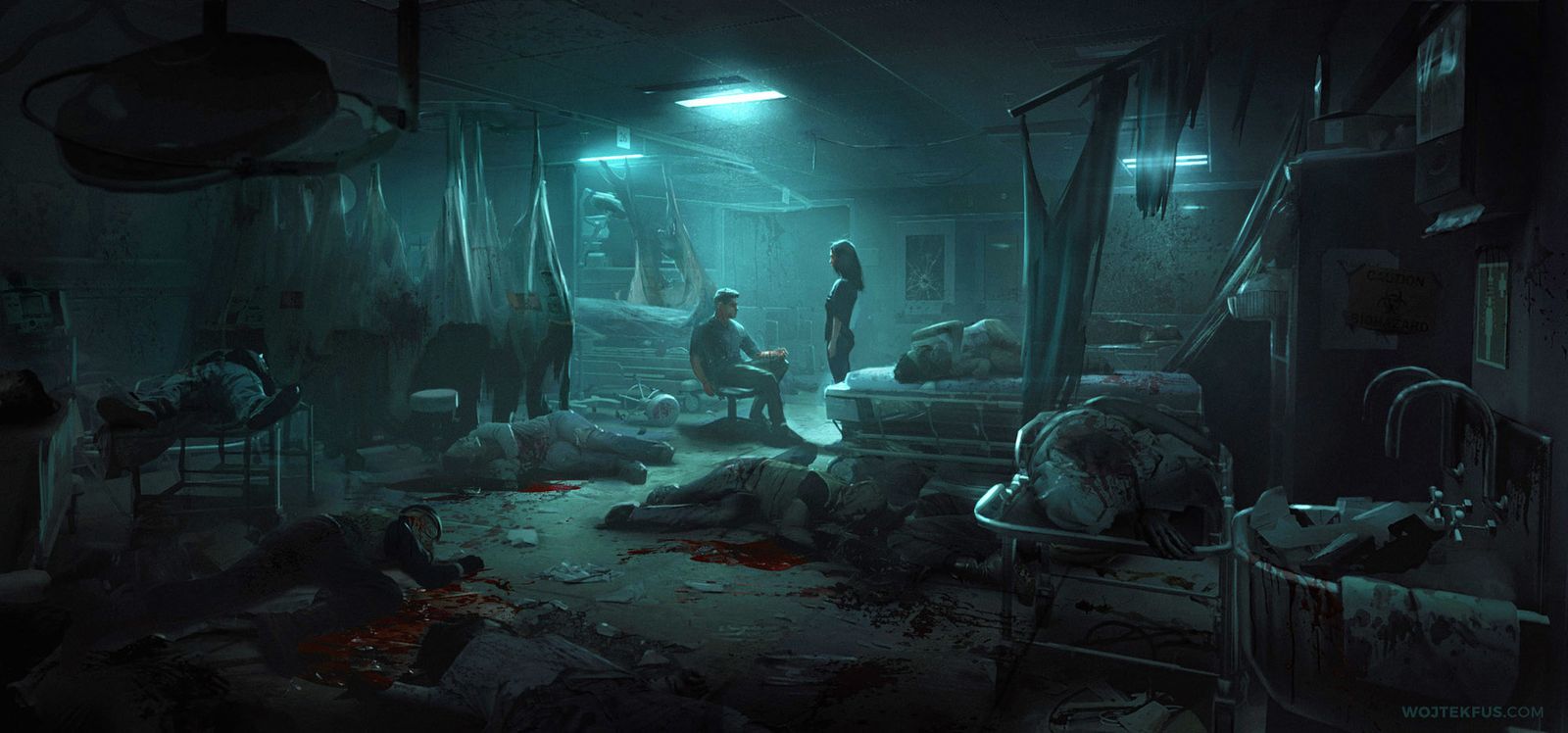
Emergency services were overwhelmed at once by the dead and by the calls for help. Protests and riots broke out for a variety of reasons, and police shootings rose with them, making more of the dead. Arson went unchecked; with the fire departments unable to keep up, whole city blocks burned. Hospitals were overrun as more and more patients died of their injuries.
Without workers, the electrical grids and communication centers failed. Power went out across the country and cellular networks fell apart completely. By nightfall on August 27th, society had collapsed. Civilization itself held on for two more weeks, until Operation Cobalt.
The outbreak
- April 2010
The CDC discovers the first known cases of Wildfire in the United States, quarantines them, and keeps them hidden from the public.
- August 25
The entire human race is now infected. Recently deceased people who don’t receive extreme head trauma begin to reanimate and devour the living.
- August 26
The World Health Organization publishes an “International Disaster Emergency Response” memorandum on disposing of the infected dead. Do Not Resuscitate orders are to be disregarded, and patients who can’t be revived within sixty seconds are to be moved to a morgue. If signs of life resume after that, the remains are to be treated as a biological hazard.
- August 27 · Monument Day
The President addresses the nation on the rising violence and unrest. The U.S. Army places Washington, D.C. under martial law and orders the evacuation of essential government employees and members of Congress. Civilians are told to stay in the city until after the priority evacuation.
- August 28
Governors of eleven states declare a state of emergency and call on the National Guard to quell riots and protests. The FAA grounds all flights. Cities across the country impose curfews and declare martial law. The National Guard reinforces Atlanta, home of the CDC, where one of the largest refugee centers in the country opens; people in rural Georgia are told to evacuate there. The President declares a nationwide state of emergency.
- August 29
The White House is evacuated.
- September 5
As the outbreak grips Atlanta, some CDC staff leave the complex to be with their families.
- September 8
Running short on resources, the CDC closes its infirmary and seals it off.
- September 9 · The End of Civilization
At 11 a.m. Central, “higher authority” in the military chain of command declares Operation Cobalt. The forces guarding Atlanta and the CDC are overrun, and most of the remaining staff flee or take their own lives. By nightfall, Operation Cobalt is in full effect.
Operation Cobalt
Confidential orders went out with the declaration. Military personnel were told to pack lightly, assured of their safety, and told not to arouse suspicion among the civilians in the safe zones. Separate instructions covered the handling of civilians and quarantined patients: their “humane termination.”
That night the U.S. Air Force bombed every major city and destroyed every major bridge, and the Marines went into the cities to liquidate any survivors. With the cities destroyed, government leaders missing or dead, and every military installation abandoned or overrun, human civilization effectively collapsed. What’s left belongs to the dead, and to whoever can survive the lawlessness among the living.
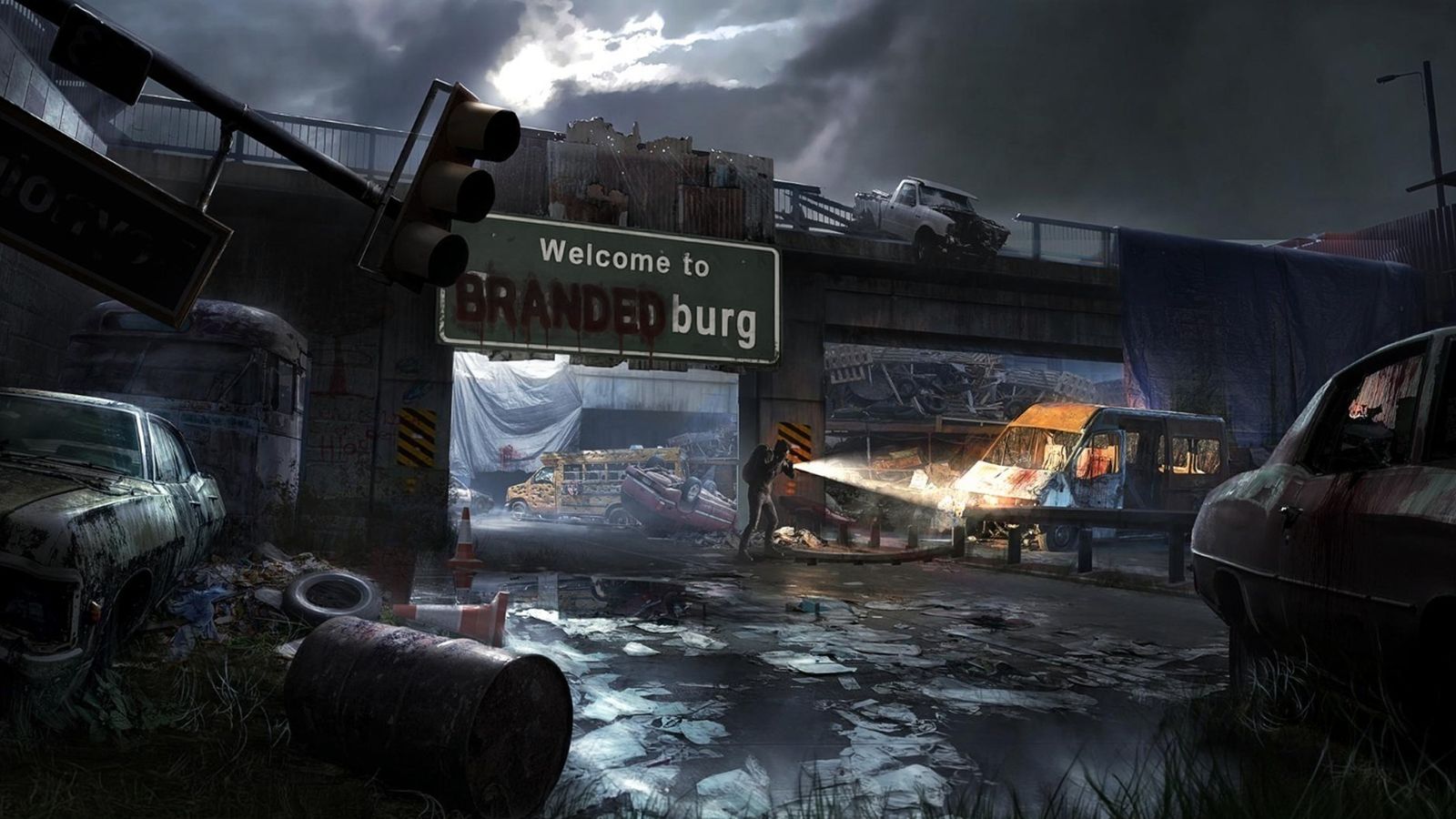
Brandenburg
Season 3 takes place in Kentucky in 2010, in the weeks after the fall.
Brandenburg
Brandenburg, on the Ohio River, is the season’s main hub and the heart of the Safe Zone.
The zones
Danger grows with distance from Brandenburg. The map is divided into zones, and each one changes what happens when your character dies there.
- Safe Zone (the Frontier). Brandenburg and its surroundings.
- High Risk Zone (the Badlands). The land around the Safe Zone. A mechanical death here means a roll on the Death and Injury System.
- Death Zone (No Man’s Land). The most dangerous region on the map. Louisville lies inside it. No one can live here permanently, and Louisville is no-build.
- Scorched Wasteland. Beyond the Death Zone. Inaccessible.
Guns don’t turn up in the Safe Zone or the High Risk Zone. They are found only in the Death Zone, and they are extremely rare even there.
The full rules for each zone are in the server rules.
The dead
The dead are slow. They shamble rather than run, but they gather in the cities, wander the streets in herds, and are far stronger than any living person. Wildfire spreads through the air before it ever spreads through a bite, so the living carry it without symptoms. After death it brings the host back, unless the brain is destroyed.
Path to Zenith
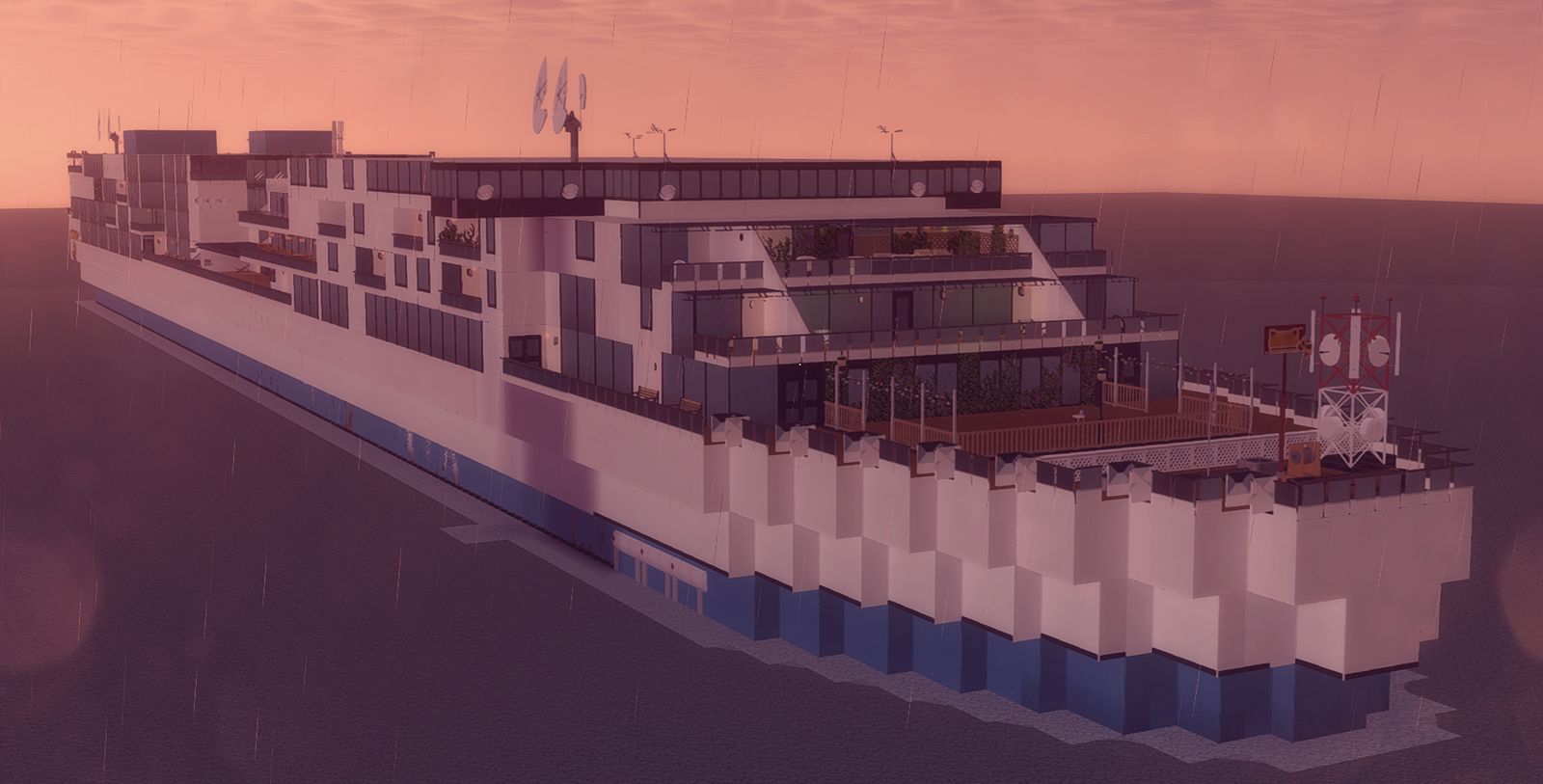
The preseason, Season 2.5, follows the last cruise of the Path to Zenith: a river liner full of refugees, heading up the Ohio toward Kentucky.
Path To Zenith, Inc.
Path To Zenith Incorporated was founded in 1966 as Eastern-Western Cruises, a publicly traded cruise line offering high-quality, affordable leisure voyages through the southern United States. Riding a flourishing economy and new navigation technology, it helped change how Americans saw river travel, and grew to cover more than thirteen North American rivers every year. By 2010, backed by growth investment from Norwegian Cruise Line Holdings, PTZ was a respected name in a growing industry. Its motto never changed:
“Southern Hospitality, Northern Decadence.”
The last cruise
- August 18, 2010
The Path to Zenith sets out on its last cruise of the summer: a month-long run from Pittsburgh to New Orleans, with stops in Louisville, Kentucky and Memphis, Tennessee.
- August 24
The ship spends the day in Louisville and continues its voyage that evening.
- August 26
Captain Nathan Giroux tells his staff about the WHO memorandum and announces to the guests that the next port of call is Memphis, five days out, where they will receive partial refunds and be allowed to disembark. Bravo Company of the 256th IBCT deploys to Baton Rouge to keep the peace.
- August 28
Captain Giroux announces that the National Guard has ordered everyone aboard to remain aboard until further notice. The ship is cleared to refuel and resupply in Memphis.
- August 29
A massive outbreak hits Bravo Company at Tiger Stadium. Most of the company is lost in the retreat to the LSU Veterinary Teaching Hospital, which Captain Erickson locks down with his remaining men.
- August 31
The Zenith makes port in Memphis. The National Guard lets no one off while the ship refuels and takes on a few pallets of emergency rations and essentials.
- September 1
The dead, and the people fleeing them, overrun the Guard at the Port of Memphis. Captain Giroux and his crew get the Zenith out of port before the dead can reach the ship.
- September 2
Giroux continues south to Baton Rouge, welcoming refugees along the way.
- September 6
Contact with the outside world grows limited. No one knows what the ship will find at the Port of Greater Baton Rouge.
- September 9
At 8 a.m. the Zenith reaches an empty port. Volunteers find supplies, a huge barrier cutting the port off from the city, and the groans of the dead beyond it. At 11:30, Bravo Company comes over the barrier and flags down the ship. Once underway, Captain Erickson tells everyone aboard about Operation Cobalt, and that he and his men will not carry it out. Moments later, Baton Rouge is bombed.
- September 11
At a forum aboard the ship, Captain Erickson announces that the Zenith will turn back up the Mississippi and on up the Ohio toward smaller towns, in the hope that fewer people means better odds. The ship will keep taking on survivors.
- September 12
Erickson puts the ship on rations of food and water.
- September 22
Approaching Cairo, Illinois, where the Ohio meets the Mississippi, the ship is full. Erickson announces it will take no more refugees. Preseason begins here.
Never get out of the boat
The Zenith had practically owned the Mississippi for years. Anything that troubled her seasoned crew would have to be something like the end of the world. By late August, the ship had slipped out of the company’s control, and out of her captain’s.
Memphis is where optimism was taken out back. Captain Giroux meant it as a discharge point: anyone who wanted to leave could. The National Guard saw it differently, held their posts, and turned back every passenger who tried to disembark, handing out supplies instead. Then the groans of the dead filled the docks, and soon the dead themselves. By the end of the day the Guard was overrun, and the ship was next. Before the dead could board, Giroux and his crew made the hard call and left the struggling Guardsmen behind.
Baton Rouge was meant to be the end of the trip. Louisiana had been the last hope for many, and the ship found it empty. Then the orders came through. Captain Erickson and his troops were among those who would not carry out what Operation Cobalt demanded, and they sought refuge aboard. Given what the ship now carried, the National Guard saw fit to commandeer it. Every remaining directive of Captain Giroux and his crew fell under the Guard’s jurisdiction, and under martial law their authority was rarely questioned.
The Zenith headed back north, its brochures and itineraries now only mementos. Endless water, and no hope of leaving it: disembarking meant death. Weeks passed in death-shrouded views of a bleak world, seen from balconies and through unwashed windows. The ship kept letting people on at brief stops, and the space once meant for luxury became space for survival. Only one maxim held: keep the living alive, and keep the dead dead.
Bravo Company
The 256th Infantry Brigade Combat Team, headquartered in Lafayette, is the Louisiana Army National Guard’s primary combat formation, with a lineage reaching back to the Louisiana militia of 1770. Its Bravo Company was always one of the first to mobilize when Louisiana needed it; the unit served through Hurricanes Katrina and Rita in 2005. Under Captain Sebastian Erickson, Bravo took the Army’s motto a step further: This We’ll Defend, with Duty, Humanity and Respect.
After the WHO memorandum, Bravo stood by in Baton Rouge, then secured Tiger Stadium at LSU for disaster relief. On August 29th an outbreak breached the stadium. What was left of the company fell back to the LSU Veterinary Teaching Hospital with many of the refugees they had been ordered to protect, and held it for eleven days, until a lookout on the roof spotted movement on the river to the north and the Operation Cobalt orders came down. Erickson was honest with his men and the refugees about the orders, gave his word he would not follow them, and set out to get everyone to the ship. They fought through the dead to the Port of Greater Baton Rouge. More men, and every one of the refugees, were lost on the way.
Preseason
Preseason roleplay takes place aboard the Zenith. Until the season proper opens, everywhere except the ship and Brandenburg is off limits.